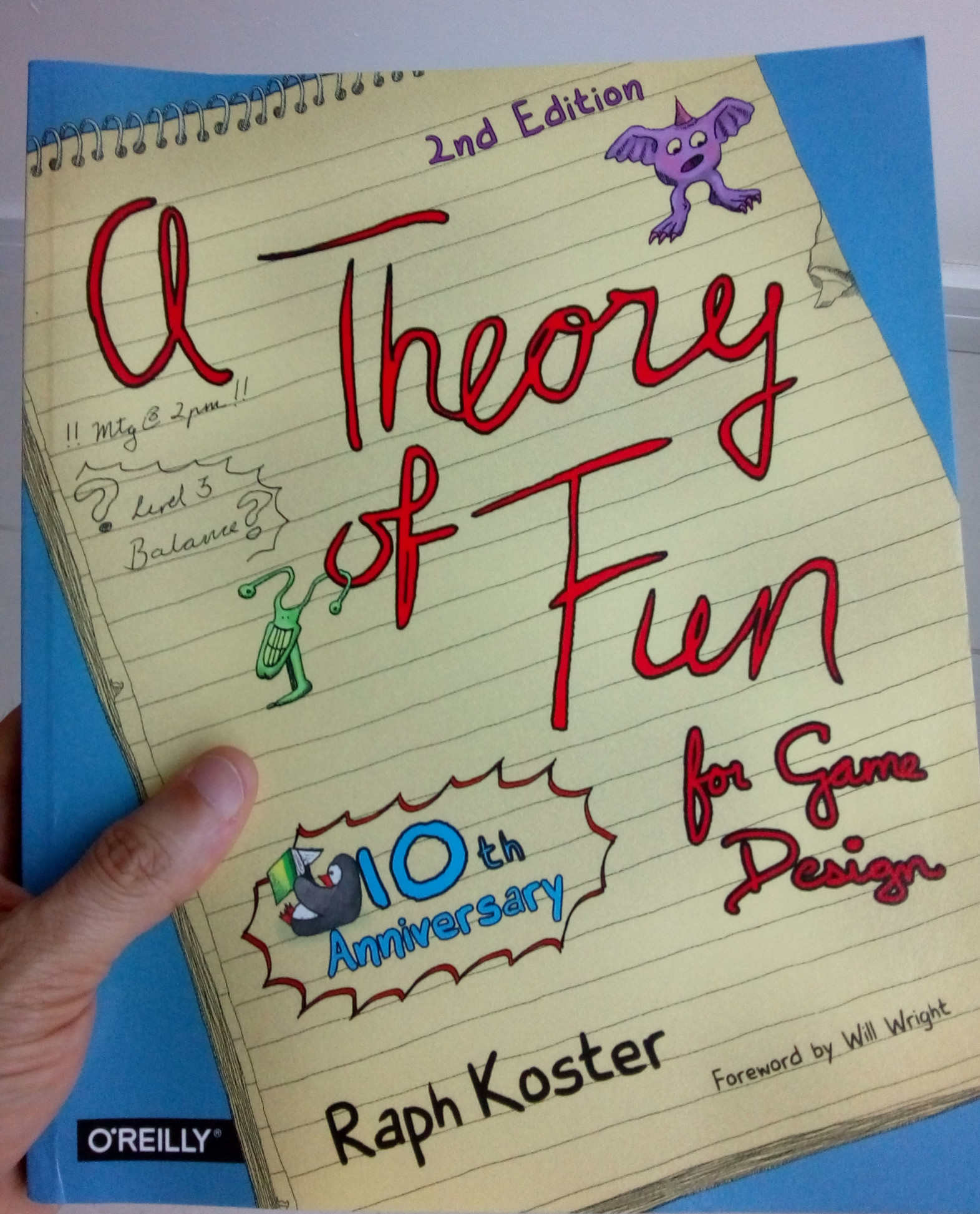
Where to go next on my quest to learn game design? A book about fun? As a long
time follower of Chris Crawford, I am convinced that fun is overhyped. I want to
see games growing to be as respected as other media are. I want to see the game
equivalents of Schindler’s List 🎥 and Crime and Punishment 📖 – great
works which are not fun, right? Anyway, I gave credit to all praise this book
has attracted over the years and decided to read it. And thus here’s my review
of Raph Koster’s A Theory of Fun for Game Design, Second Edition (O’Reilly,
2013).
As someone skeptical about fun, I must start by remarking that Raph defines the
term in a rather peculiar way: fun is the pleasant feedback our brain gives us
when we learn new patterns. That’s a broad of a definition! Our brains really
dig patterns, so this encompasses a lot of things. Think about how Spielberg
used color in Schindler’s List: it contains patterns related both to the human
condition and to cinema itself as a media. So, yes, with the definition we are
using here, these gloomier pieces of art are fun.
Once done with defining fun, the book continues with an engaging sequence of
arguments that start with “all games are educational”, goes through “games teach
certain things better than pretty much any other media” and culminates with
“sadly, most of our games are teaching obsolete skills”. This last point is very
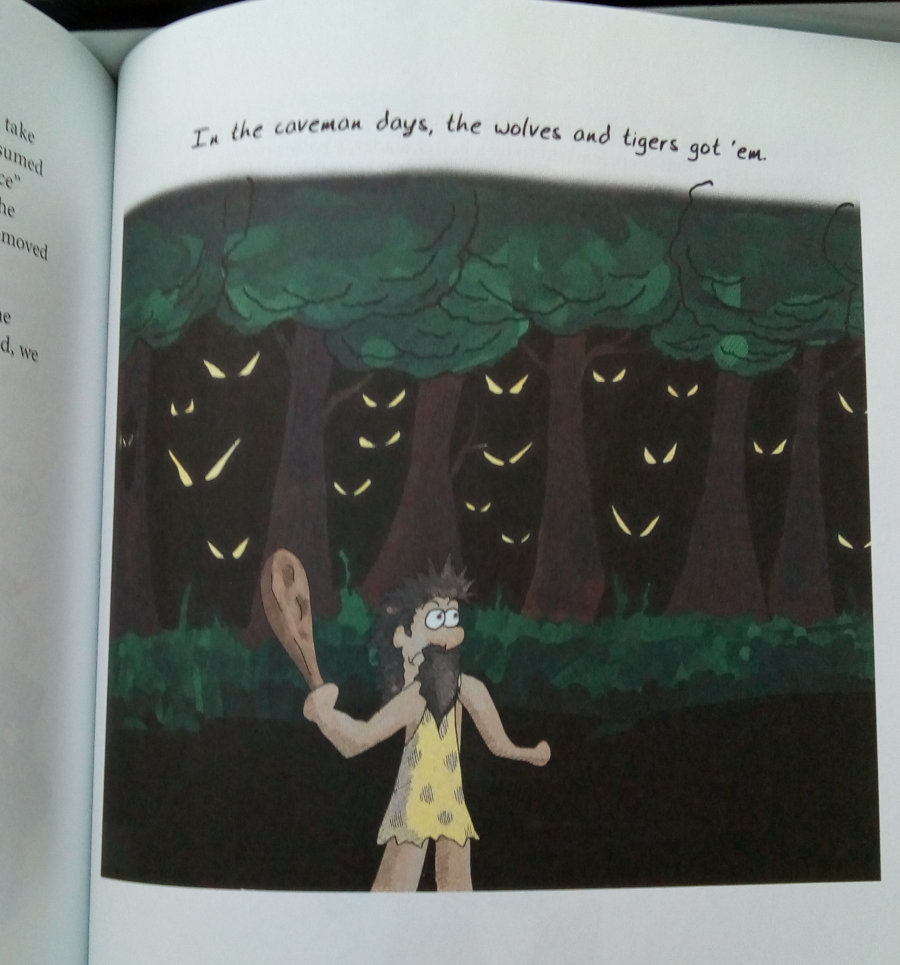
deep. Our typical game teaches about things like territory, use of force to
solve problems and blind obedience. These things could have been a useful lesson
back when we were bands of cavemen, but they are no longer winning strategies
for the 21st century citizen. To me, this was the most powerful
message in the book.
A partial view of myself, happy to hold such a great book.
The second most important lesson for me was not a new one, but the book deepened
my understanding of it by a large amount. In short, we need to focus on formal
mechanics (or ludemes). When Raph says that today’s average game teaches about
using force to solve problems, he is not talking about the dressing of the
game (AKA fiction layer: things like story, graphics and audio) – he’s
talking about its core, about the very game mechanics, which are the
distinguishing feature of this media. It is still very hard for me to think in
terms of pure mechanics, I must find ways to exercise this skill.
These two points alone would have been enough for me to enjoy the book, but it
contains other very interesting discussions about topics like art, ethics, and
us human beings.
Any downsides? Not really downsides, but I can make two warnings. First, this is
not a book about the craft of game design. By reading it I didn’t considerably
learn about balancing, whiteboxing, playtesting and the like. This is not
primarily a book about how to make games, but about why making them.
Easy and fun to read. How not love a book with a cartoon every other page?
The second warning is that the book may look like an easy read. It is fun, it
mixes text with charming cartoons, the reading just flows. The danger here is to
miss the important messages it contains. To take the maximum out of A Theory of
Fun, you need to spend some time thinking about it.
A Theory of Fun for Game Design is considered a classic, and deservedly so.
Previously in my quest on learning and practicing game design, I learned a thing
or two about crafting game, avoiding certain pitfalls and improving existing
designs. But I was (and still am) looking for the games I want to develop.
Thinking about what I want to teach may provide the direction I need.